 Made in Germany
Learning how to pose for a headshot really comes down to one thing: showing confidence through a posture that feels natural. Whether you need a LinkedIn photo, a resume pic, or a business-profile image, your body language makes a powerful first impression before you even say a word.
The Building Blocks of a Powerful Pose
Your headshot is often the very first handshake with a recruiter, a new client, or a potential colleague. Before they read your resume or visit your LinkedIn profile, they see your photo. Use your posture to communicate confidence and approachability.
An open, relaxed stance signals trustworthiness. A tense or closed-off pose can feel defensive. Small details—the angle of your shoulders, the tilt of your head, even a slight lean—combine to set the tone.
Why Angles and Posture Matter So Much
• Avoid facing the camera straight on—it can resemble a mugshot.
• Turn your chest 10 to 45 degrees away from the lens.
• Then angle your head back toward the camera for depth and energy.
This adjustment:
- Defines your silhouette
- Injects movement
- Often makes you look more composed and leaner
Core Elements of a Successful Headshot Pose
| Element | Objective | Quick Tip |
|---|---|---|
| Body Angle | Create depth and a dynamic feel. | Turn your body ~45° away, then bring your head back toward the camera. |
| Shoulders | Project openness and confidence. | Roll shoulders back and down; drop the shoulder closest to the camera. |
| Chin Position | Define jawline; avoid double chins. | Push chin slightly forward and down—it looks better on camera. |
| Lean | Convey engagement and approachability. | Lean slightly toward the camera to connect with the viewer. |
| Hand Placement | Look natural and avoid awkwardness. | If hands show, have them rest on a hip, crossed loosely, or on a desk. |
Finding Your Authentic Stance
The best pose is one that feels authentic to you. It should capture a natural moment of confidence, not mimic someone else.
“The best headshot pose is one that doesn’t look like a pose at all.”
If you want a hassle-free way to turn your best shots into studio-quality portraits, consider AI-generated headshots at Headyshot.
Mastering Your Body Angles and Posture
Your body angle and posture separate a flat photo from one that feels engaging. Long before anyone reads your name or title, how you hold yourself speaks volumes.

Find Your Best Angle
- Turn your body ~45° left or right and see which side feels natural.
- A subtle lean toward the camera adds warmth.
Pro photographers often ask subjects to lean slightly from the waist—this breaks a static pose and makes the photo feel more connected.
Align Your Shoulders for Confidence
Slouching kills a photo. To fix this:
- Roll shoulders up, back, and let them drop naturally.
- Drop the shoulder closest to the camera a bit for a dynamic line.
Common Posture Mistakes and How to Fix Them
• The Turtle Neck: Jutting the chin up shortens the neck. Imagine a string pulling the crown upward.
• Stiff Shoulders: Breathe, then let shoulders fall away from ears.
• Leaning Back: Always lean forward just a touch to seem approachable.
Building this foundation helps you feel ready—whether in a studio or using your own camera to produce AI-generated headshots.
Fine-Tuning Your Expression and Head Position
Your facial expression connects you with viewers. A real, genuine smile is your strongest asset. Aim for a “Duchenne smile” that reaches your eyes.
Getting a Smile That Looks Real
- Avoid forcing a grin. Think of something that genuinely makes you happy.
- Use the “squinch”: a slight lower-eyelid squint that adds confidence.
Try saying a word ending in “uh” (like “mocha”)—your mouth naturally forms a relaxed, open smile.
Defining Your Jawline by Positioning Your Chin
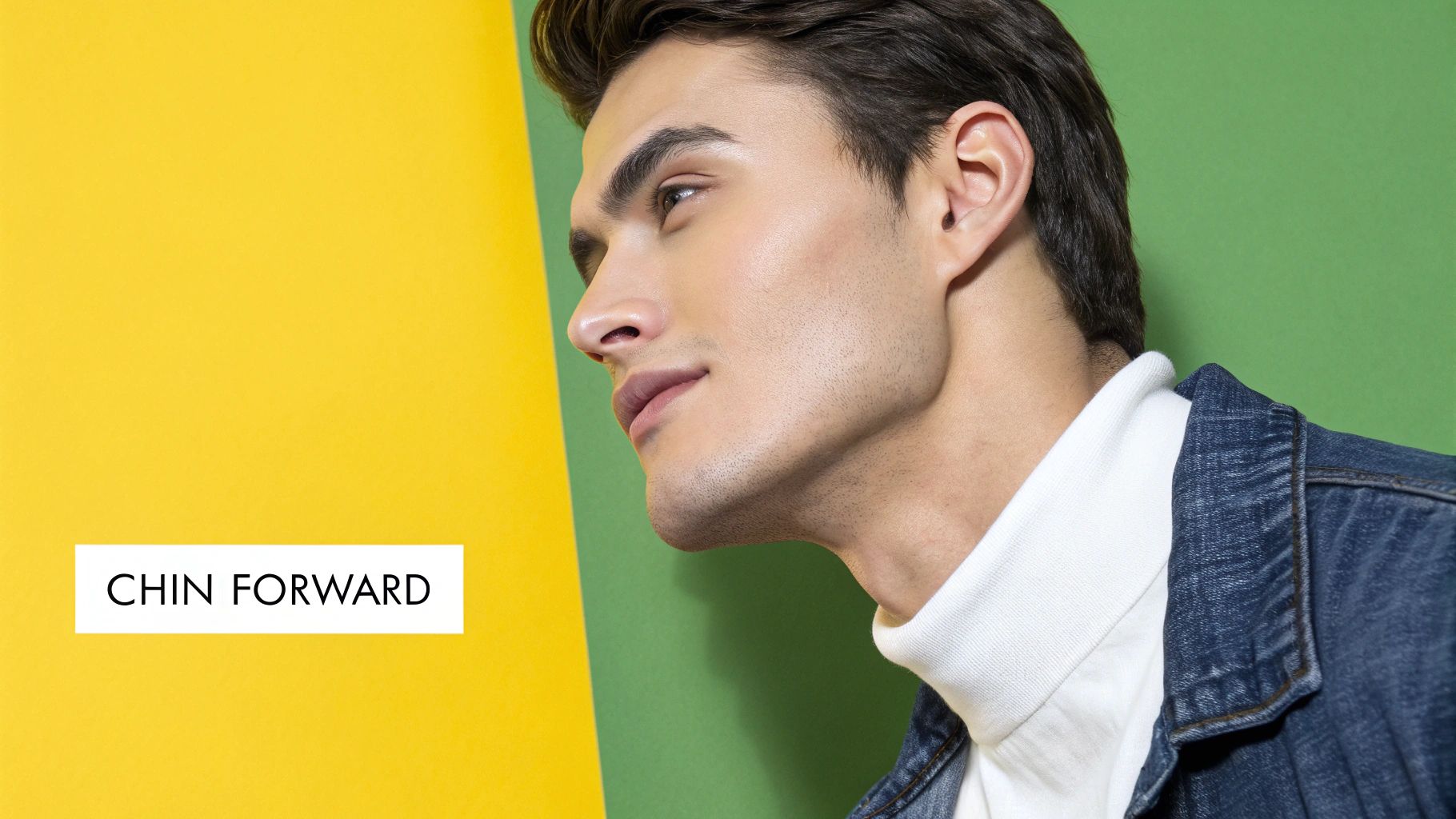
- Tilt your chin down slightly and push it forward to avoid a double chin.
- This move feels odd but defines your jaw and avoids harsh shadows.
Using a Head Tilt to Set the Mood
- Side Tilt: Warm and approachable.
- Forward Tilt: Intense and focused—great for leadership roles.
Vary your tilts for a range of inputs if you plan to generate AI headshots. Learn more in our guide on how to look confident in AI headshots.
What to Do With Your Hands and Arms
Let your hands have a job. If they hang, you may look stiff. Give them a purpose without stealing the show.
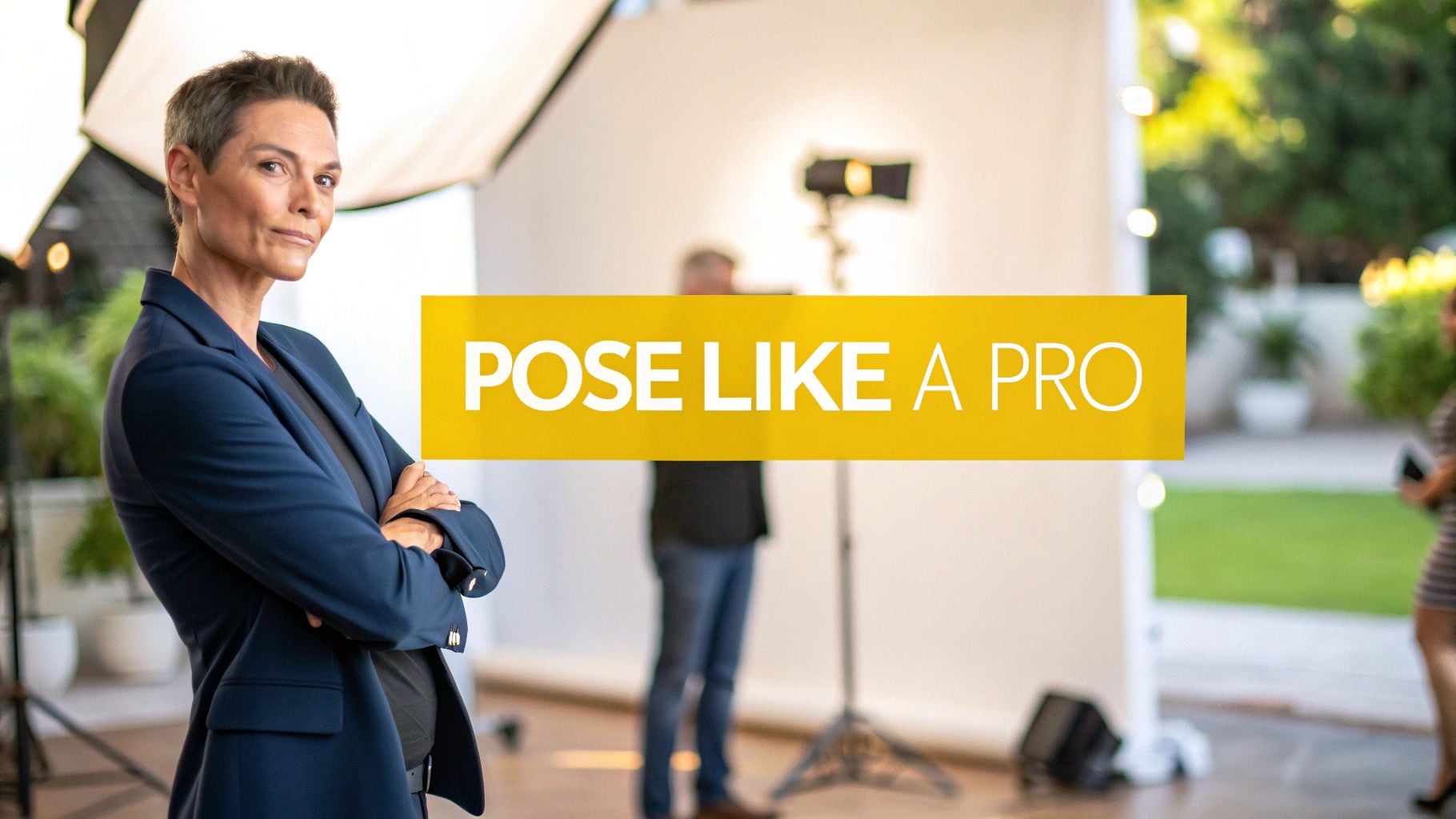
Making the Crossed-Arms Pose Work
- Stay Loose: Hands rest gently on biceps, don’t grip.
- Show Hands: Keep them visible to keep the pose open.
- Add a Smile: It softens the look and boosts approachability.
Pro Tip: Shake out your arms or pretend to adjust your jacket lapel just before the shot. Those in-between moments often yield the most natural images.
Other Natural Hand Positions to Try
- One Hand in Pocket: Creates a relaxed vibe.
- Hands Clasped: Rest one hand over the other near your waist.
These options help polish your headshot or prepare photos for AI-generated headshots.
Choosing Poses That Match Your Profession
Your pose should reflect your industry and personal brand. A stance that suits a creative director won’t work the same for a financial analyst.
Poses for Corporate and Technical Roles
For finance, law, tech, or engineering, choose poses that feel grounded and direct:
- Confident Cross: Relaxed arms signal authority.
- Subtle Lean-In: Conveys engagement and focus.
- Hands Lightly Clasped: Shows composure and thoughtfulness.
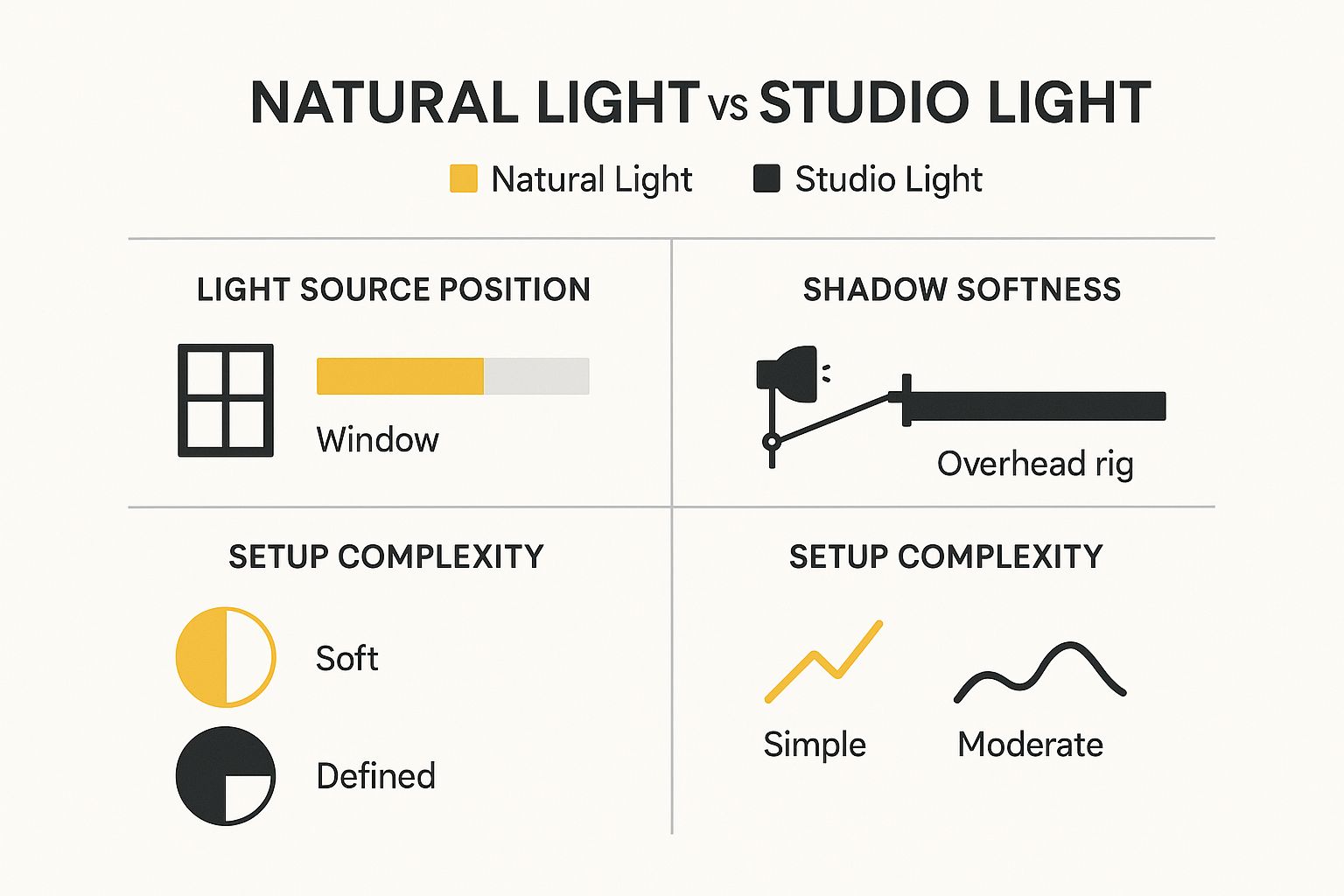
Natural light softens; studio light sharpens. Choose what fits your professional image.
Poses for Creative and Client-Facing Professions
If you’re in marketing, sales, or design, radiate warmth and approachability:
- One Hand in Pocket: Relaxed confidence.
- Gentle Movement: A real laugh or jacket adjustment adds authenticity.
- Leaning on a Surface: Shows ease in your environment.
For more on style trends, explore the stylistic evolution of headshots.
Posing Suggestions by Industry
| Industry | Recommended Posing Style | Key Message Conveyed |
|---|---|---|
| Finance & Law | Structured, direct, minimal movement. | Trustworthiness, stability. |
| Technology & Engineering | Forward-leaning, focused. | Innovation, competence. |
| Creative & Marketing | Dynamic, open gestures. | Creativity, energy. |
| Healthcare & Wellness | Gentle lean, soft smile. | Empathy, care. |
| Sales & Real Estate | Engaging, friendly, open language. | Confidence, charisma. |
Matching your pose to your profession helps your headshot work as hard as you do—whether you’re preparing for a photoshoot or selecting images for an AI headshot generator.
Putting It All Together for a Perfect Headshot
Before shooting, spend a few minutes in front of a mirror:
- Test body angles, chin positions, and hand placements.
- Build muscle memory so you feel at ease during the shoot.
Your Final Pre-Shoot Checklist
- Outfit Choice: Solid colors work well; match your industry’s expectations.
- Relax Your Body: Take a deep breath; shake off any tension.
- Think of Something Happy: Trigger a genuine Duchenne smile with a pleasant memory.
Keep moving slightly to capture those candid “in-between” moments. A static statue rarely looks natural.
From Practice to a Perfect Picture
Learning how to pose headshots is a skill that improves with practice. The goal is to capture a moment where you appear at ease and in control. A strong headshot is an essential tool for any professional.
Getting Your Headshot Poses Just Right: Your Questions Answered
Even with the best guidance, you may have questions when you step in front of the camera. Getting these small details right can take your headshot from good to great.
Should I Smile in My Professional Headshot?
Yes. A genuine smile makes you seem approachable and trustworthy. Choose a smile that matches your industry:
- Closed-Mouth Smile: Projects quiet confidence—good for law, finance, academia.
- Open-Mouth Smile: Feels energetic and warm—ideal for creative fields, sales.
What’s the Most Flattering Angle for a Headshot?
Avoid a straight-on stance. Turn your body ~45° away, then bring your chin and gaze back to the camera. A slight lean toward the lens closes the distance and draws viewers in.
How Can I Look Natural and Not So Posed?
The secret is to actually be relaxed:
- Shake out arms and legs before shooting.
- Take deep breaths to release tension.
- Think of something that genuinely amuses you.
- Keep making small adjustments—tilt your head, shift weight, fiddle with sleeves.
Often the best shots happen in those natural, unscripted moments.
If you’re ready to transform your best casual photos into a full gallery of studio-quality portraits, explore our AI Headshot Generator at Headyshot. It’s a modern, efficient way to get dozens of professional images for your LinkedIn, resume, or business website.