 Made in Germany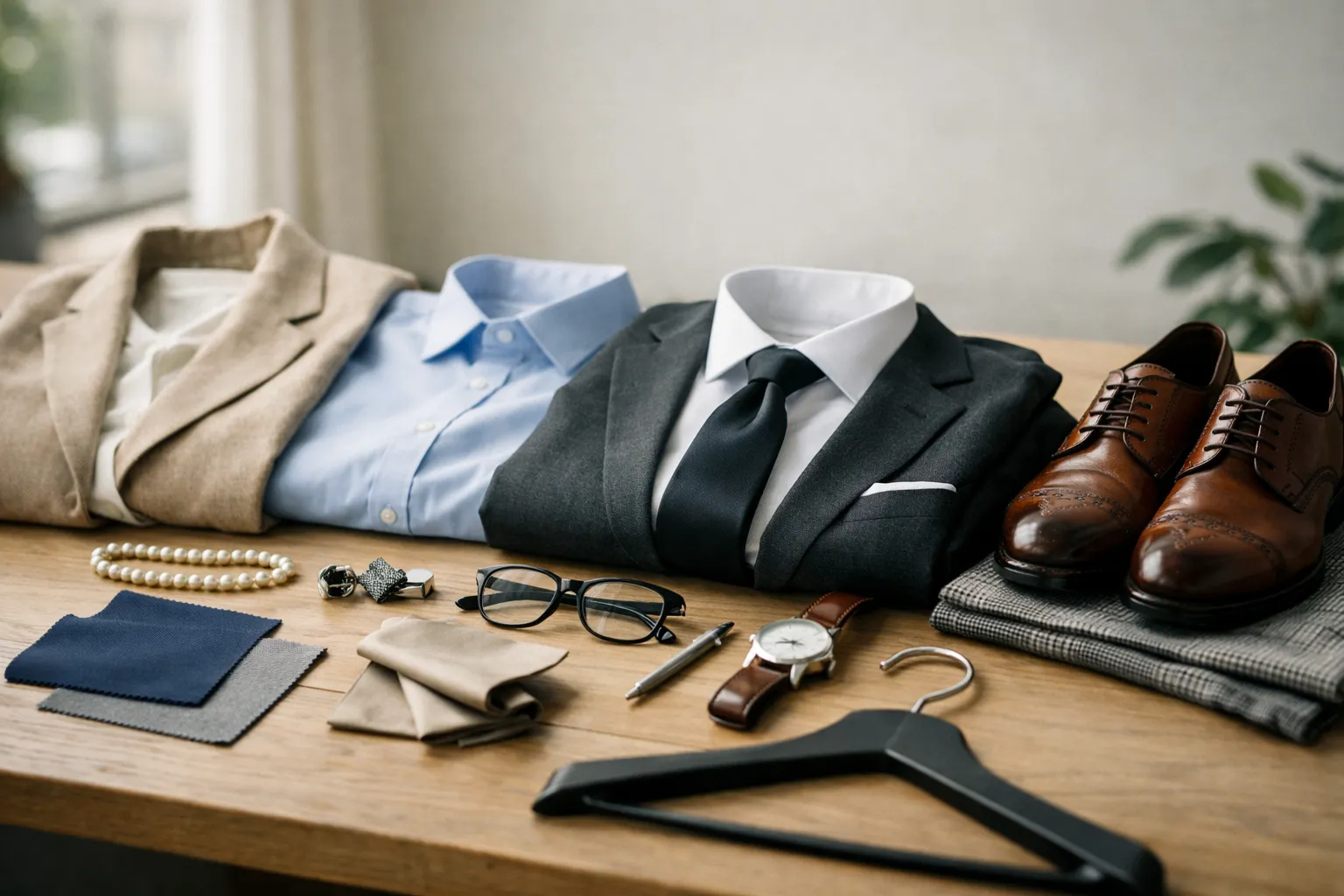
Why your headshot outfit matters more than you think
You can have the right lighting, a great photographer, and a confident smile-and still end up with a photo that feels a little “off.” Usually, it’s the wardrobe. The best outfits for business headshots don’t just look nice; they quietly signal competence, clarity, and fit for your role.
Think about where that image will live: LinkedIn, your company bio, a speaking page, a pitch deck. In every one of those places, people make snap judgments. Not because they’re harsh-because they’re busy. So let’s make it easy for them to see what you want them to see.
And here’s the good news: you don’t need a whole new wardrobe. You just need a few smart choices (and a couple of common pitfalls avoided). Ever looked at a headshot and thought, “That doesn’t feel like them”? We’re going to keep that from happening to you.
Start with your brand, not your closet
Before you pull hangers off a rack, ask one simple question: What do I want someone to feel when they land on my profile? Warm and approachable? Crisp and authoritative? Creative and bold?
This is the part most people skip. They start with “what’s clean” instead of “what fits my message.” But your business portrait wardrobe is basically visual branding-just in fabric.
Here are a few quick examples you can borrow:
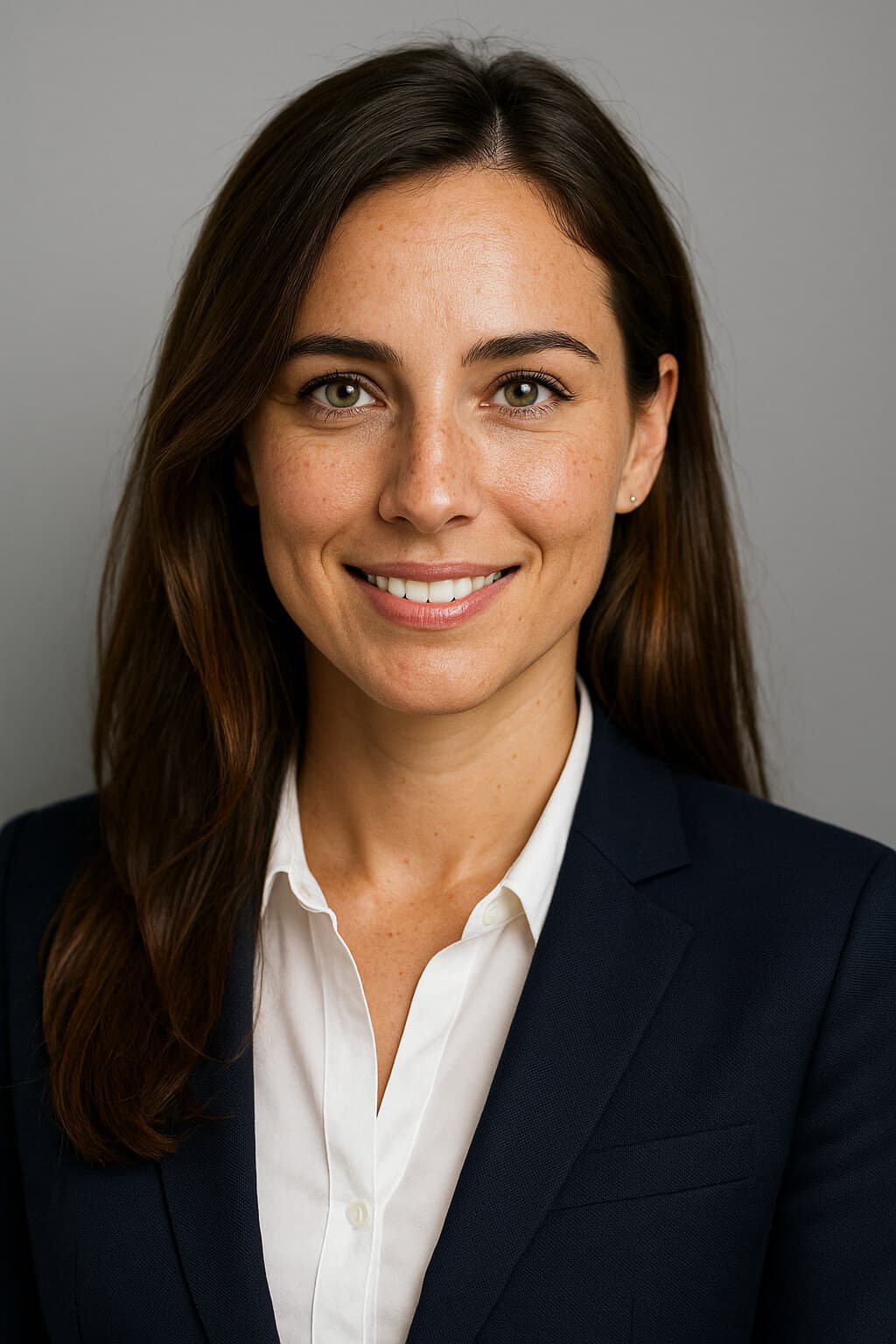
A startup founder who wants investor confidence might choose a structured blazer, minimal accessories, and a solid color that reads steady.
A therapist or coach may lean into softer textures, calmer tones, and an open neckline that feels welcoming.
A lawyer or finance professional typically benefits from sharper lines and classic colors-less “trendy,” more “timeless.”
If you’re unsure, do this: pull up three headshots of people in your field whose vibe you trust. What repeats? Is it a certain neckline, color palette, or level of formality? That pattern is your starting point for what to wear for business headshots.
Best colors for headshots (and why they work)
Color does a lot of heavy lifting in a headshot. The right shade brings your face forward. The wrong one steals the show-or makes your skin look tired.
In most cases, solid mid-tones photograph beautifully. They’re confident without shouting. Deep navy, charcoal, forest green, burgundy, and creamy neutrals tend to be reliable across a wide range of skin tones.
A small but important detail: the camera exaggerates contrast. That means bright white can glare, and jet black can swallow detail-especially if the background is dark. That doesn’t mean “never wear black.” It just means you’ll want to pay attention to fabric and lighting so black looks rich, not flat.
Also consider your background. If your photographer uses a light gray backdrop and you wear pale beige, your shoulders can visually disappear. If they use a dark background and you wear navy, you may blend in. A simple fix is to choose a color that gives gentle separation.
Want a quick reality check? Take a phone photo of yourself near a window while wearing your options. Which color makes your eyes look brighter? Which one makes you look like you need a nap? That little test often reveals the best colors for headshots faster than any rule.
Fit, fabric, and finish: the details the camera loves
A headshot is basically a close-up. So the small stuff matters.
Fit comes first. If your shirt pulls at the buttons, if your blazer collapses at the shoulders, or if your neckline sits oddly, the camera will find it. Tailoring doesn’t have to be expensive-sometimes it’s as simple as choosing the piece that fits today, not the one you plan to fit into next month.
Fabric is next. Some materials look incredible in person and oddly shiny on camera. Satin can reflect light in distracting patches. Thin knits can cling in unflattering ways. Heavier fabrics-wool blends, ponte, structured cotton, matte silk-tend to read as more polished.
Finish is the final layer: wrinkles, lint, and stray threads. It’s not about perfection; it’s about avoiding the tiny distractions that pull attention away from your face.
A photographer I work with puts it like this:
"Your outfit should be the frame, not the painting. If I notice your shirt before I notice your expression, the wardrobe is doing too much."
That “frame” idea is the heart of professional headshot attire. You want people to remember you.
Best outfits for business headshots by role and industry
Different jobs read differently on camera, and that’s okay. The goal isn’t to dress like everyone else-it’s to dress like the most credible version of yourself in your context.
Below are a few corporate headshot outfit ideas that consistently work, with room to adapt.
| Role/Industry | Outfit direction | Notes that help on camera |
|---|---|---|
| Corporate leadership | Blazer + solid top, or a tailored dress | Structured shoulders photograph as confident and “in charge.” |
| Tech / product | Smart casual (blazer or clean knit) | A crisp layer elevates without feeling too formal. |
| Finance / law | Classic suit separates, minimal accessories | Keep patterns subtle; aim for “steady” more than “flashy.” |
| Creative fields | Polished statement piece + clean basics | One interesting element (texture, color) works better than many. |
| Healthcare / wellness | Soft structure, calm colors | Avoid anything that reads stiff or overly severe unless it fits your brand. |
| Real estate / client-facing sales | Sharp, friendly, well-fitted layers | The goal is trust: approachable, not casual. |
If you’re torn between two looks, ask: Which one would a client feel more comfortable hiring? That question usually cuts through indecision.
Also, don’t underestimate small upgrades. A simple blazer over a crew-neck tee can turn into executive headshot clothing instantly-if the tee is opaque, wrinkle-free, and fits well.
What to avoid (even if you love it)
There’s a difference between “great outfit” and “great outfit for a headshot.” Some pieces are fantastic in real life but distracting in a tight crop.
Busy patterns are a common issue. Tiny checks, tight stripes, and high-contrast prints can create a wavy, shimmering effect on camera. It’s called moiré, and it’s the reason photographers often nudge clients toward solids.
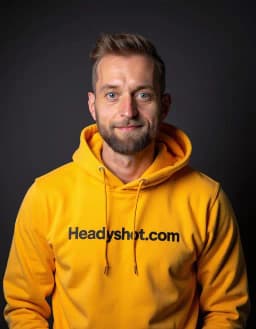
Logos and loud branding can date your photo quickly. Unless you’re intentionally showing a uniform (certain industries do), big logos tend to pull attention away from your face.
Necklines matter more than most people expect. A neckline that’s too high can feel restrictive; one that’s too low can feel distracting, even if it’s appropriate in person. Aim for balance-something that keeps the focus on your expression.
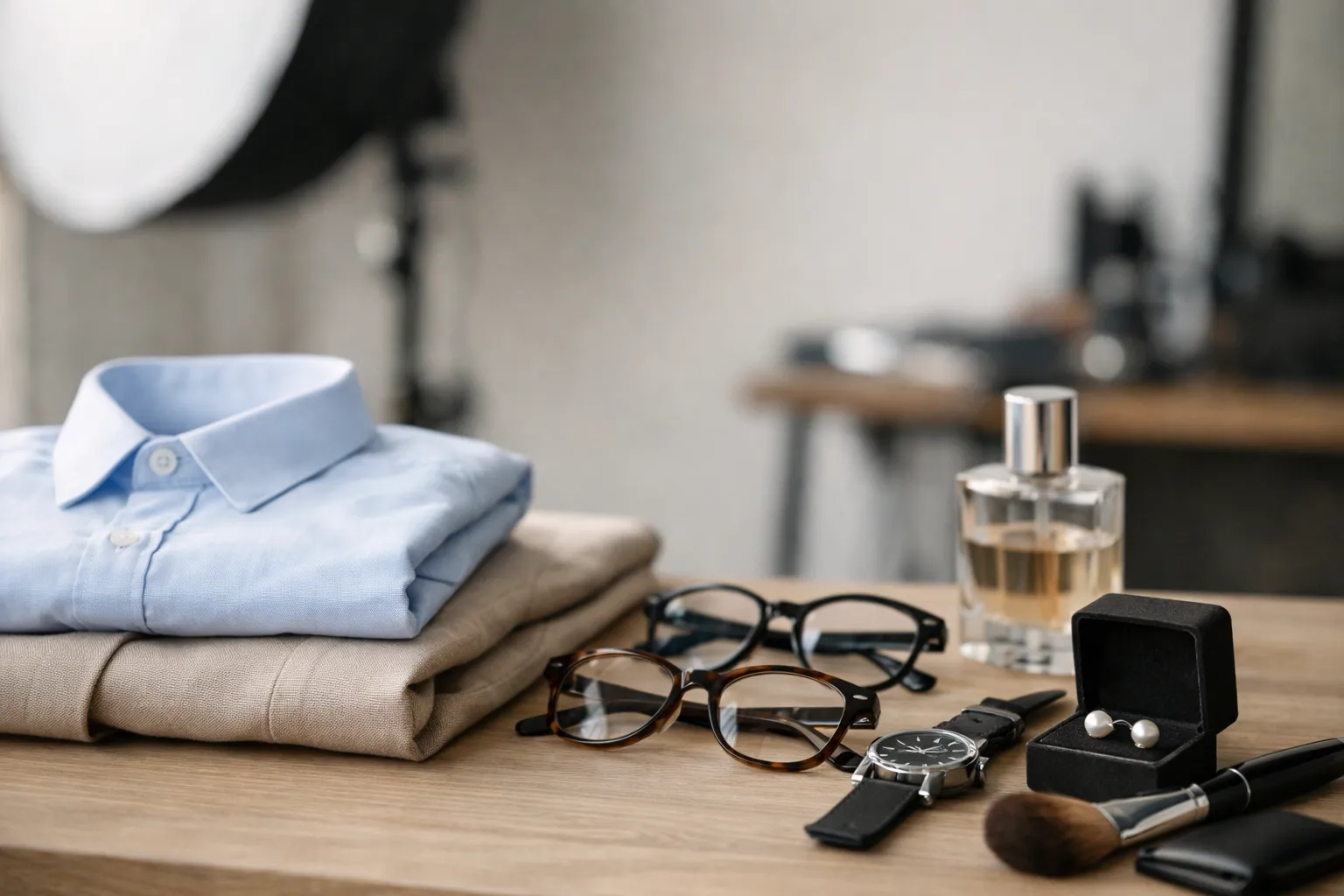
And yes, accessories can be tricky. A statement necklace can be beautiful, but if it’s the first thing someone notices, it’s competing with your eyes. If you want to wear something bold, make everything else quiet.
This is also where corporate portrait dress code comes into play. If your company is conservative, showing up in a fashion-forward look can unintentionally create friction. If your company is modern and relaxed, a very formal suit might feel stiff. The best headshot outfit guide is the one that matches your real environment.
Last-minute prep: the 30-minute checklist
Even the strongest wardrobe for LinkedIn headshots can fall flat if you rush the final details. Give yourself half an hour, and you’ll walk in looking intentional instead of scrambled.
- Try on the full outfit (including underlayers) and move around: sit, stand, raise your arms.
- Check for fit issues in the mirror and in a quick phone photo.
- Lint-roll everything, especially dark fabrics.
- Steam or press where it matters most: collar, shoulders, and front panel.
- Decide on one “hero” piece (blazer, jacket, or clean neckline) and keep everything else simple.
- Pack a backup top if you can; spills and makeup transfers happen.
That’s it. Simple, practical office headshot clothing tips-because nobody wants to be hunting for a lint roller five minutes before the camera comes out.
If you want more shoot-day guidance beyond wardrobe, these business headshots tips can help you feel prepared from lighting to LinkedIn crops.
FAQs
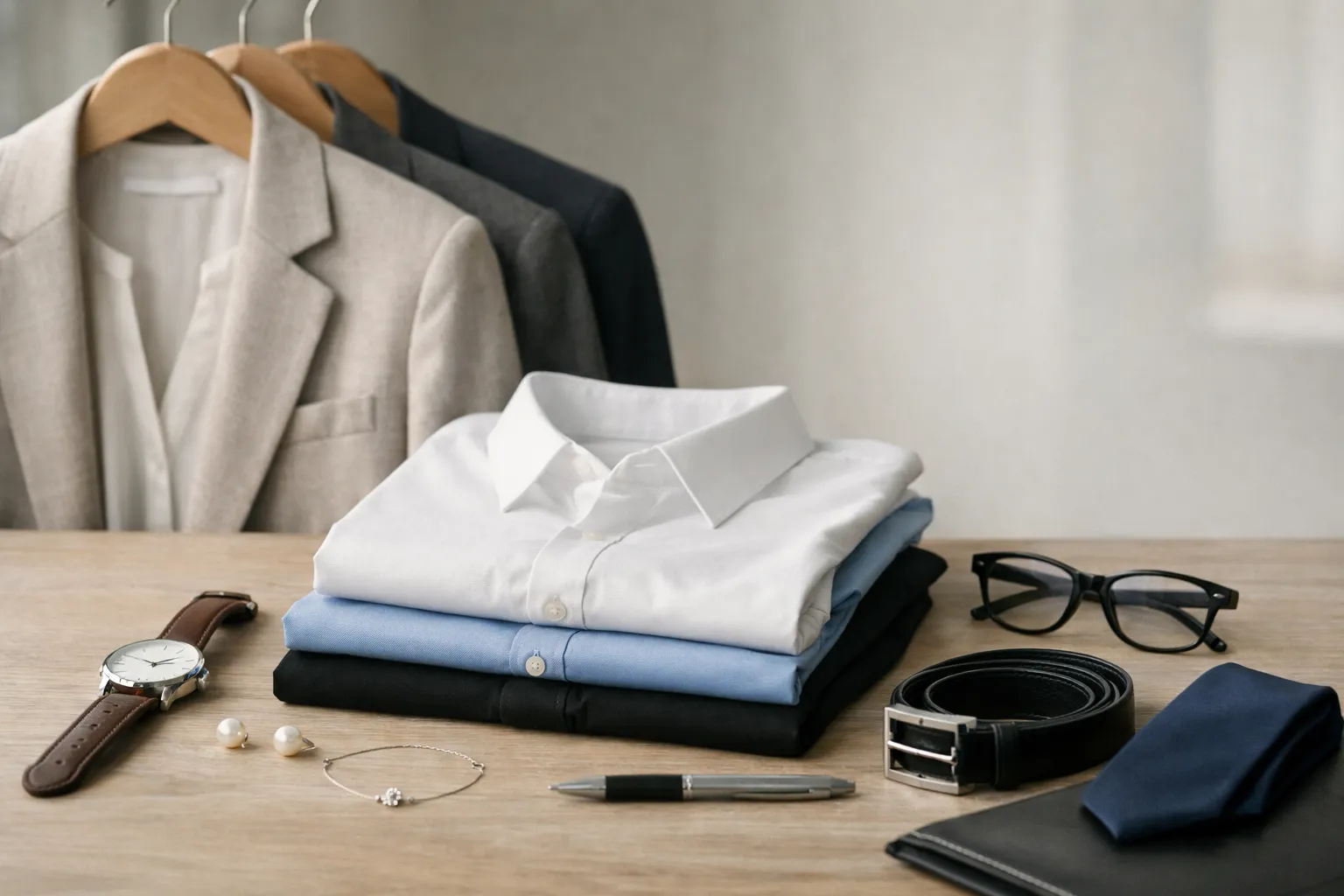
How many outfit options should I bring? If your session allows it, two is usually perfect: one more formal, one slightly relaxed. It gives you variety without creating decision fatigue. This is especially helpful if you’re building branding-friendly headshot outfits for multiple platforms.
Can I wear glasses? Yes-if they’re part of how people recognize you day-to-day. Just make sure the lenses are clean, and consider anti-reflective coating if you’re buying new frames. Reflections can hide your eyes, and your eyes are doing a lot of the trust-building work in a business portrait.
Should I match my company colors? You don’t have to, but it can help. A subtle nod-like a navy top for a blue-heavy brand-keeps things cohesive without looking like a uniform.
What if I hate shopping and don’t know what looks good? Start with what fits impeccably and photographs cleanly: a solid, well-structured top and a jacket that holds its shape. When in doubt, ask your photographer what backgrounds they use and choose colors that won’t blend in. That one step often leads you straight to the best outfits for business headshots without overthinking it.
If you want, tell me your industry, where the photo will be used, and what colors you tend to wear. I can suggest a few outfits for headshots that match your goals and won’t feel like a costume.
When your whole team needs to look the part
Great headshots do more than elevate individuals. They shape how your entire company is perceived. If you are building a consistent look across leadership pages, sales profiles, or your website, the same wardrobe principles apply at scale. Clear positioning, cohesive style, and photos that feel modern without trying too hard. That is exactly what we focus on with our Corporate Headshots for Teams. A simple way to give your whole team a professional, unified presence that feels authentic to your brand.